Sinkhole and Erosion Repair with Rip Rap in Toano
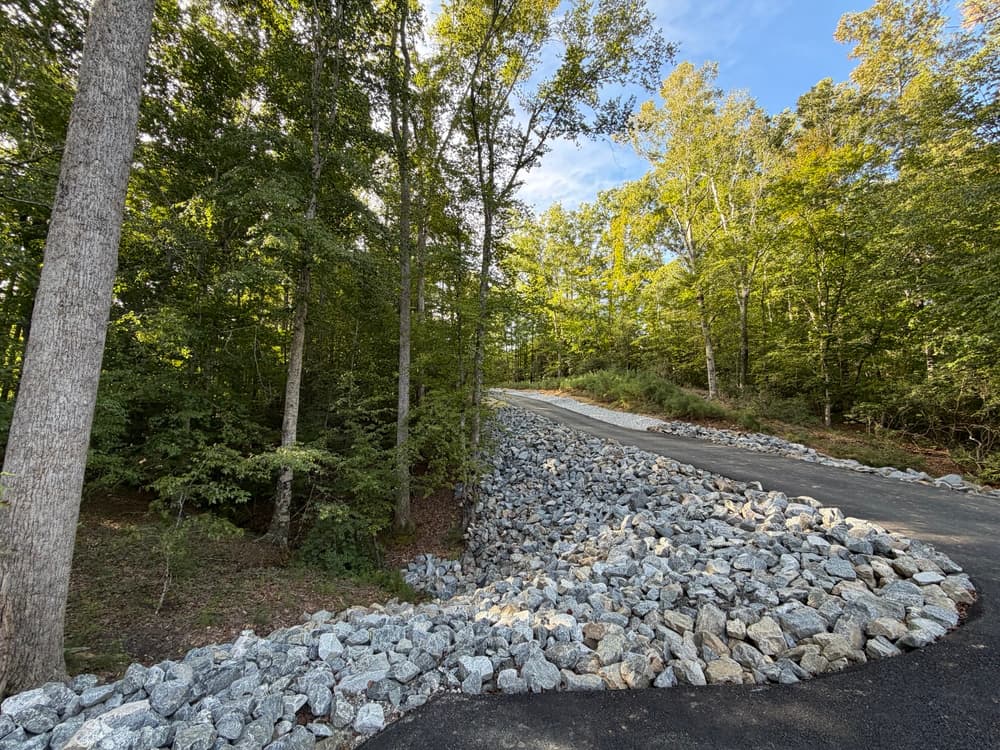
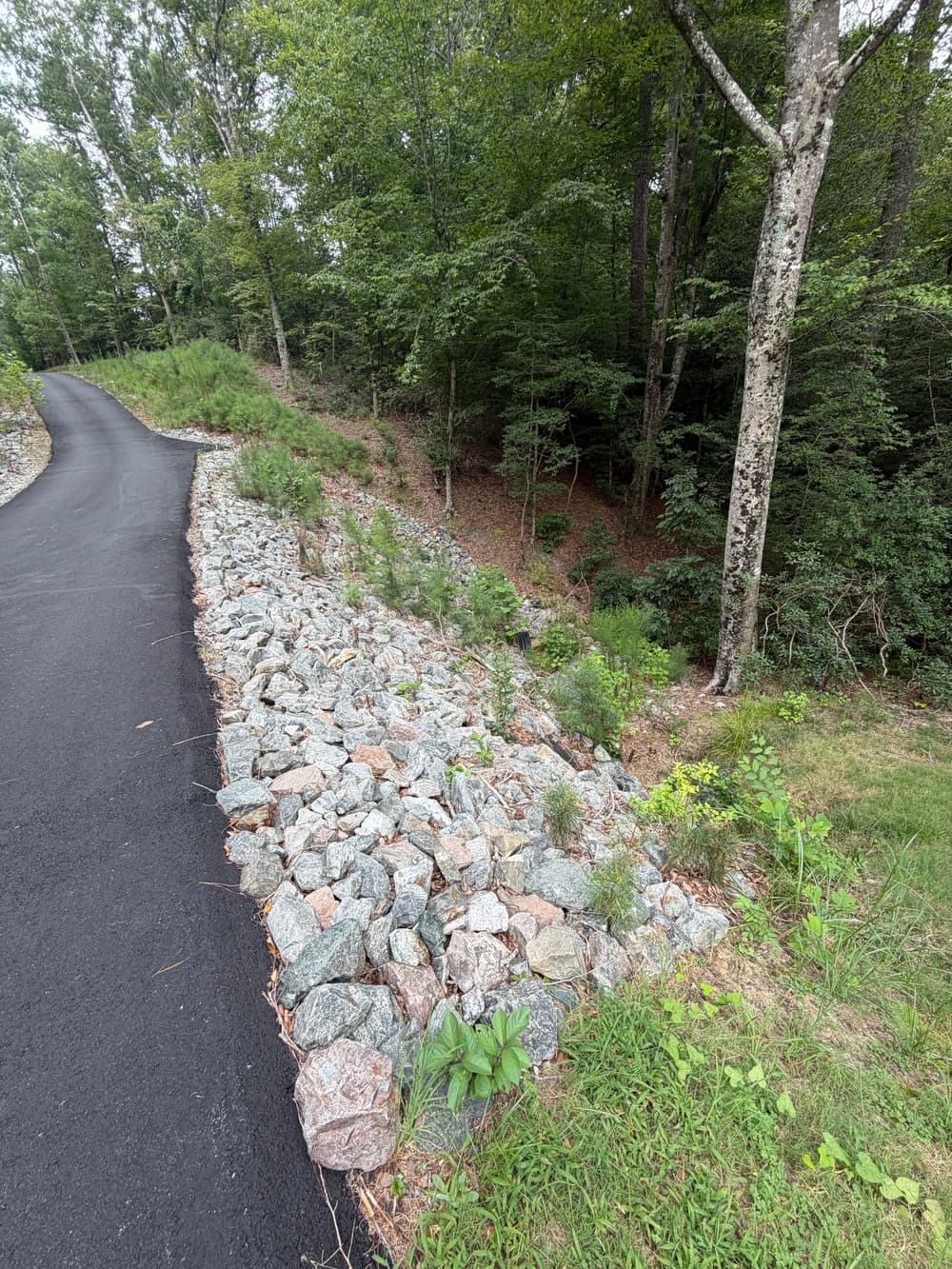
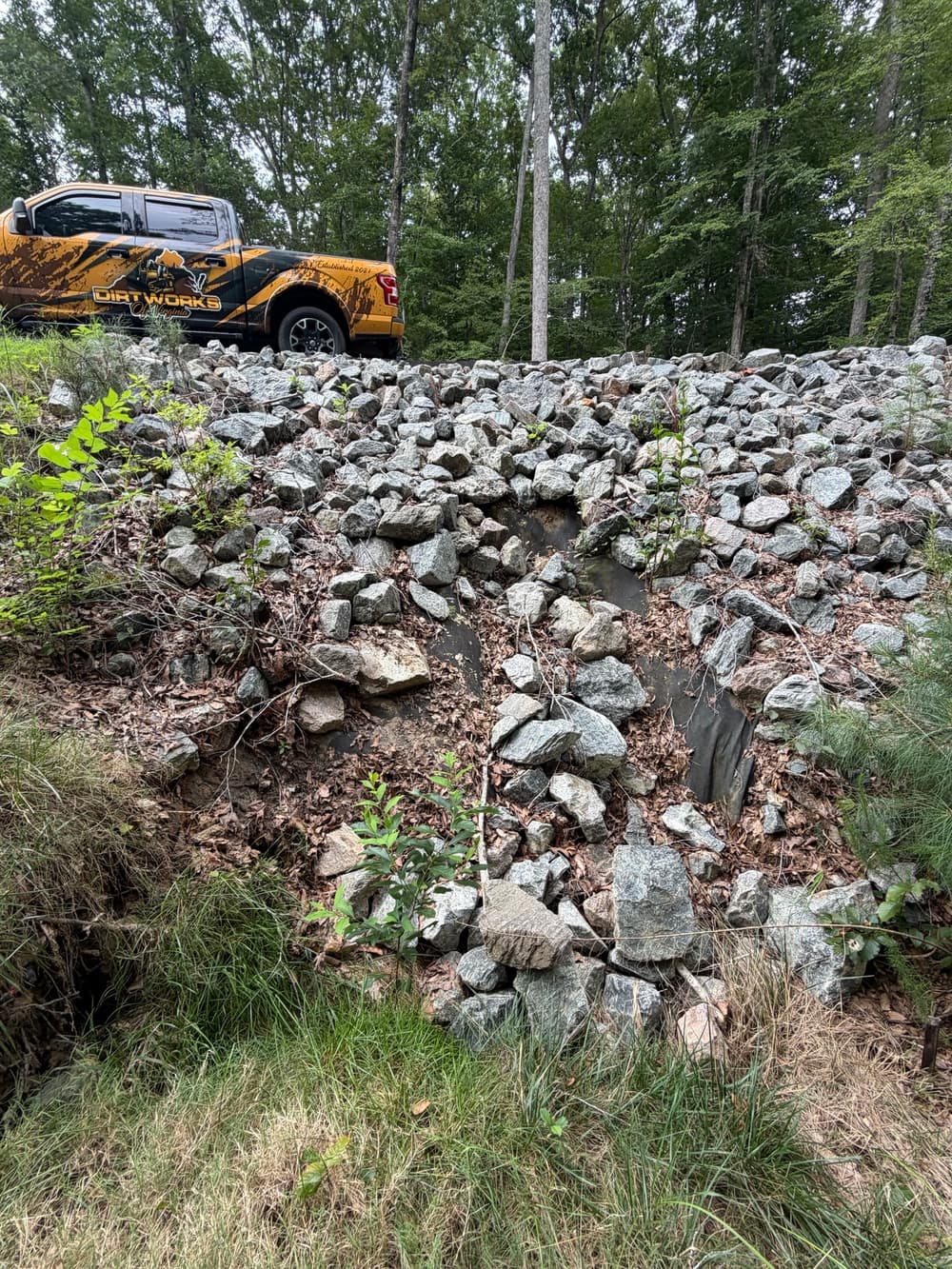
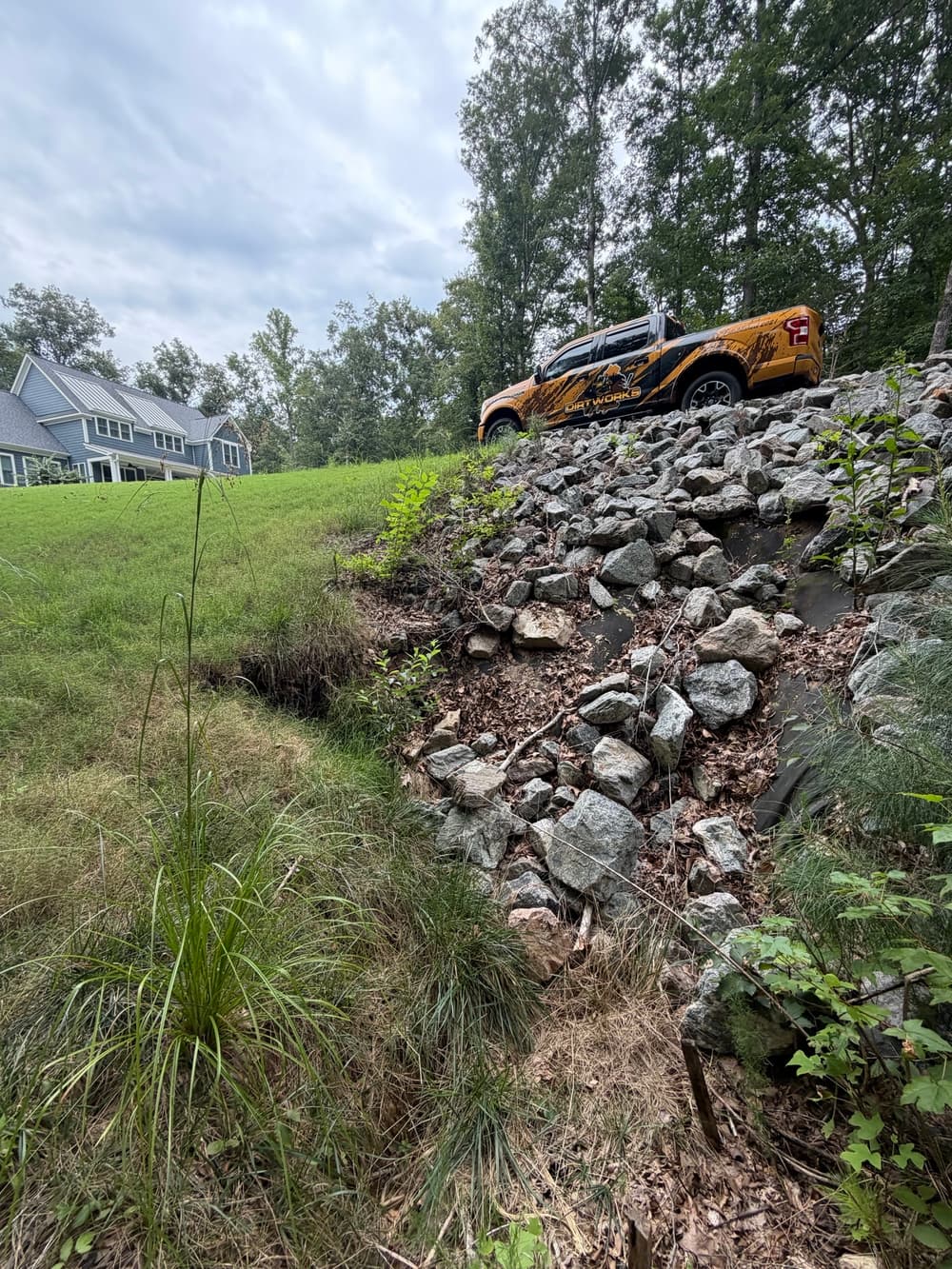
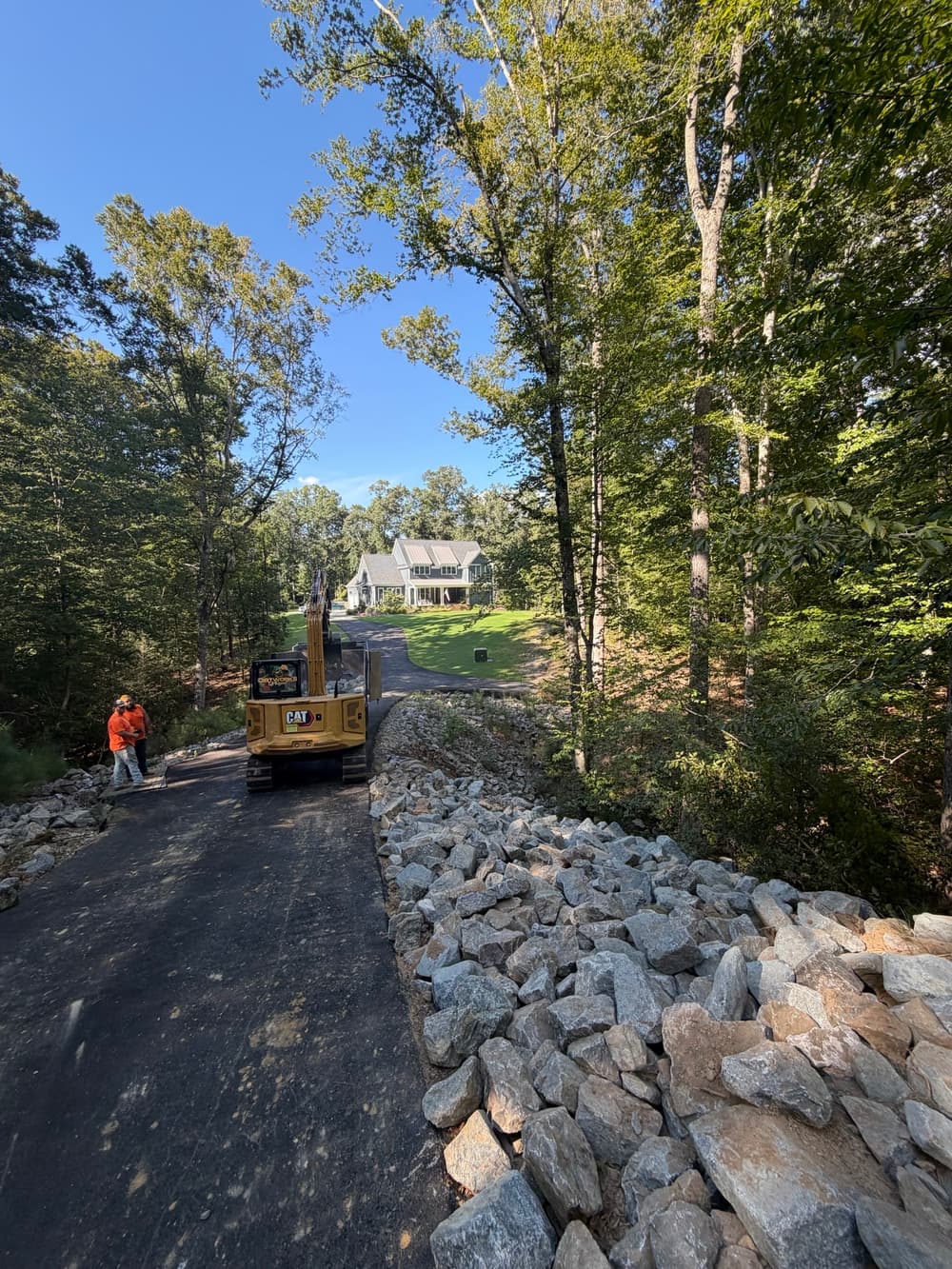
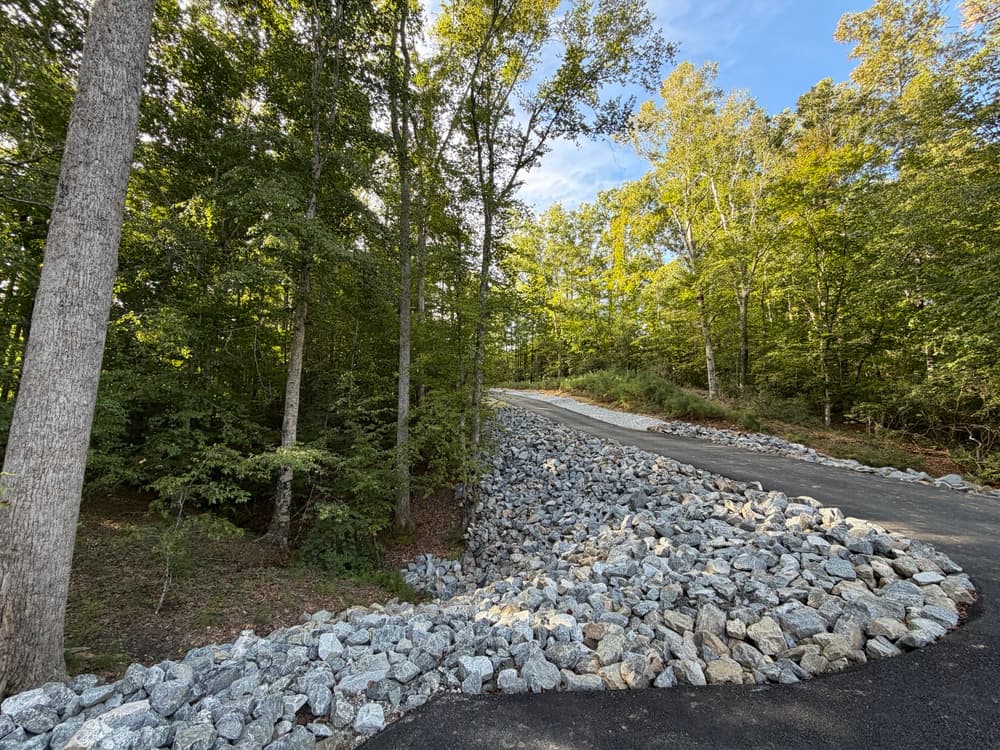
This homeowner had dealt with a growing problem for years - ever since purchasing the property, the rip rap along the driveway had never sat right. The original contractor used the wrong underlayment fabric and placed the rock poorly, and over time that meant one thing: a large sinkhole had formed and the swale feeding into it was washing out badly. Bad dirt work doesn't show its face right away. It shows up three years later when the ground starts caving in.
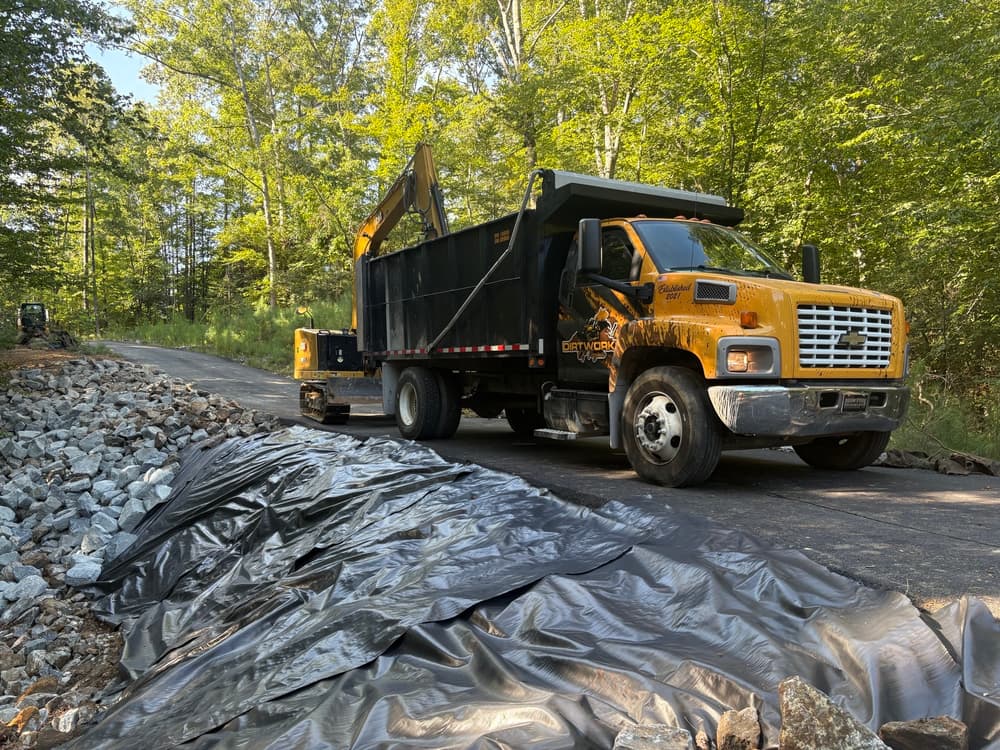
Here's what we were working with when we got on site. The existing rip rap had to be carefully pulled back and set aside - we wanted to reuse as much of it as possible. From there, we stripped out the incorrect fabric and cleared the vegetation that had worked its way into the problem areas. The sinkhole itself was holding wet, unsuitable fill material that had to come out before anything structural could go back in.
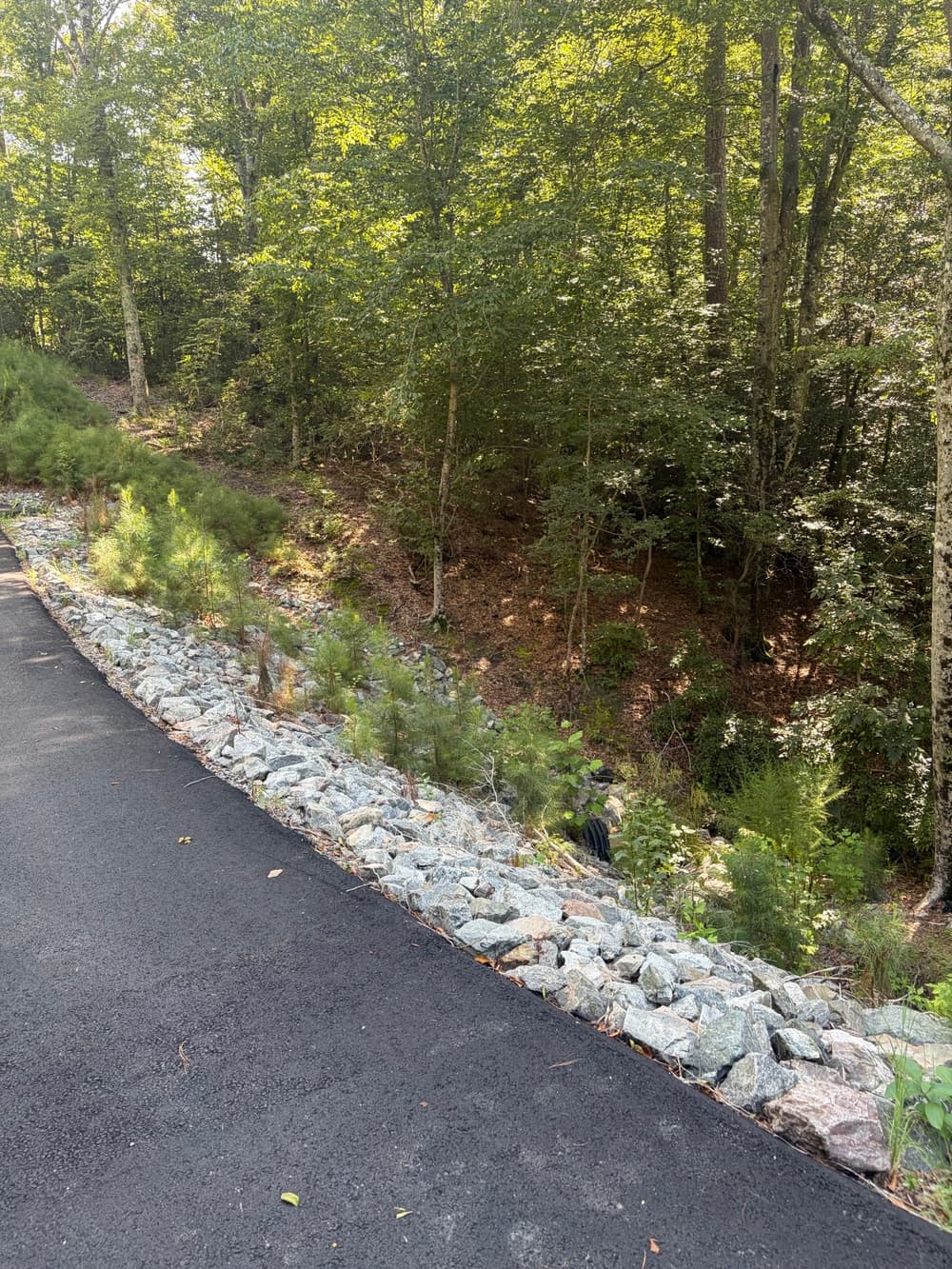
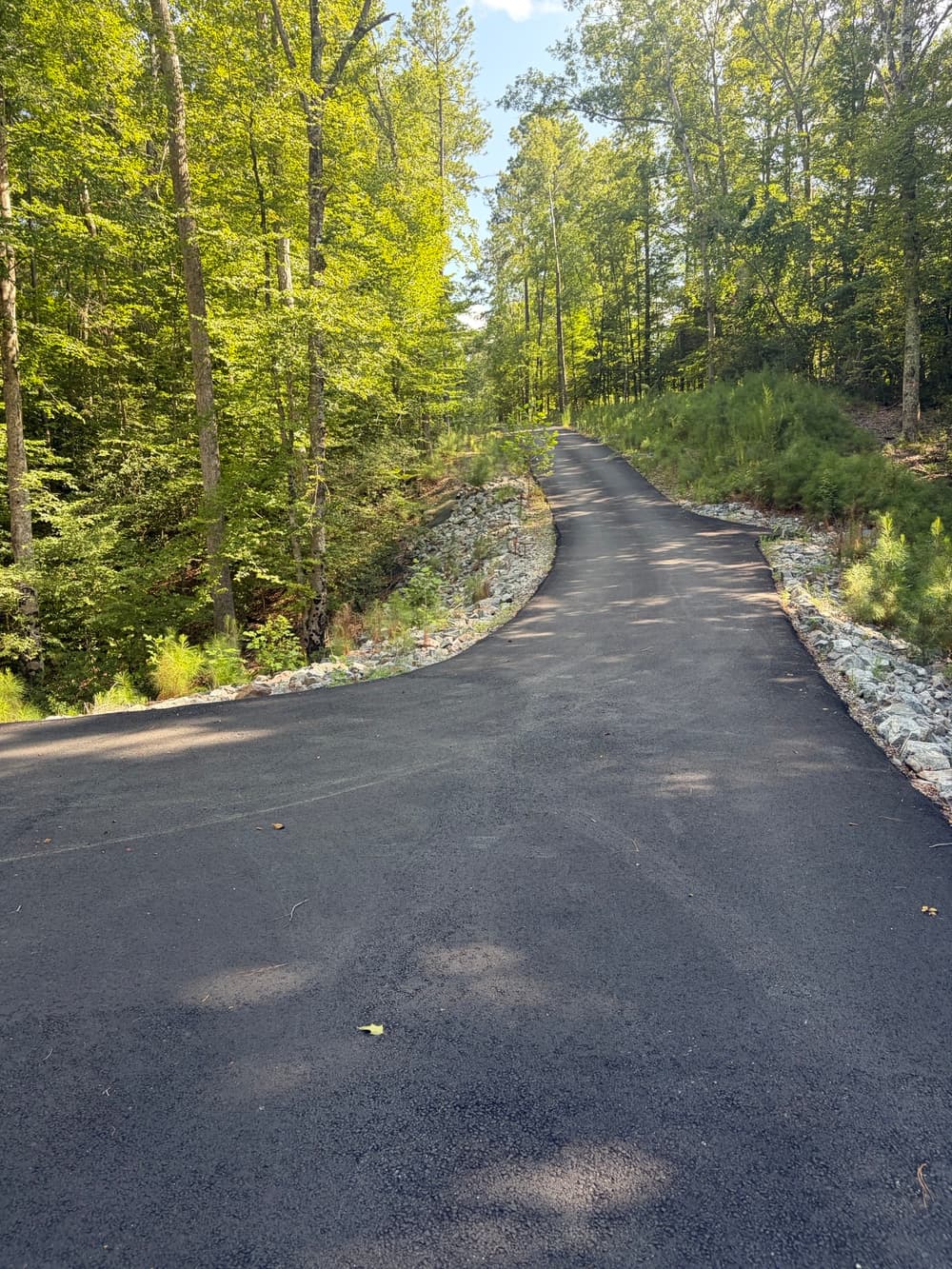
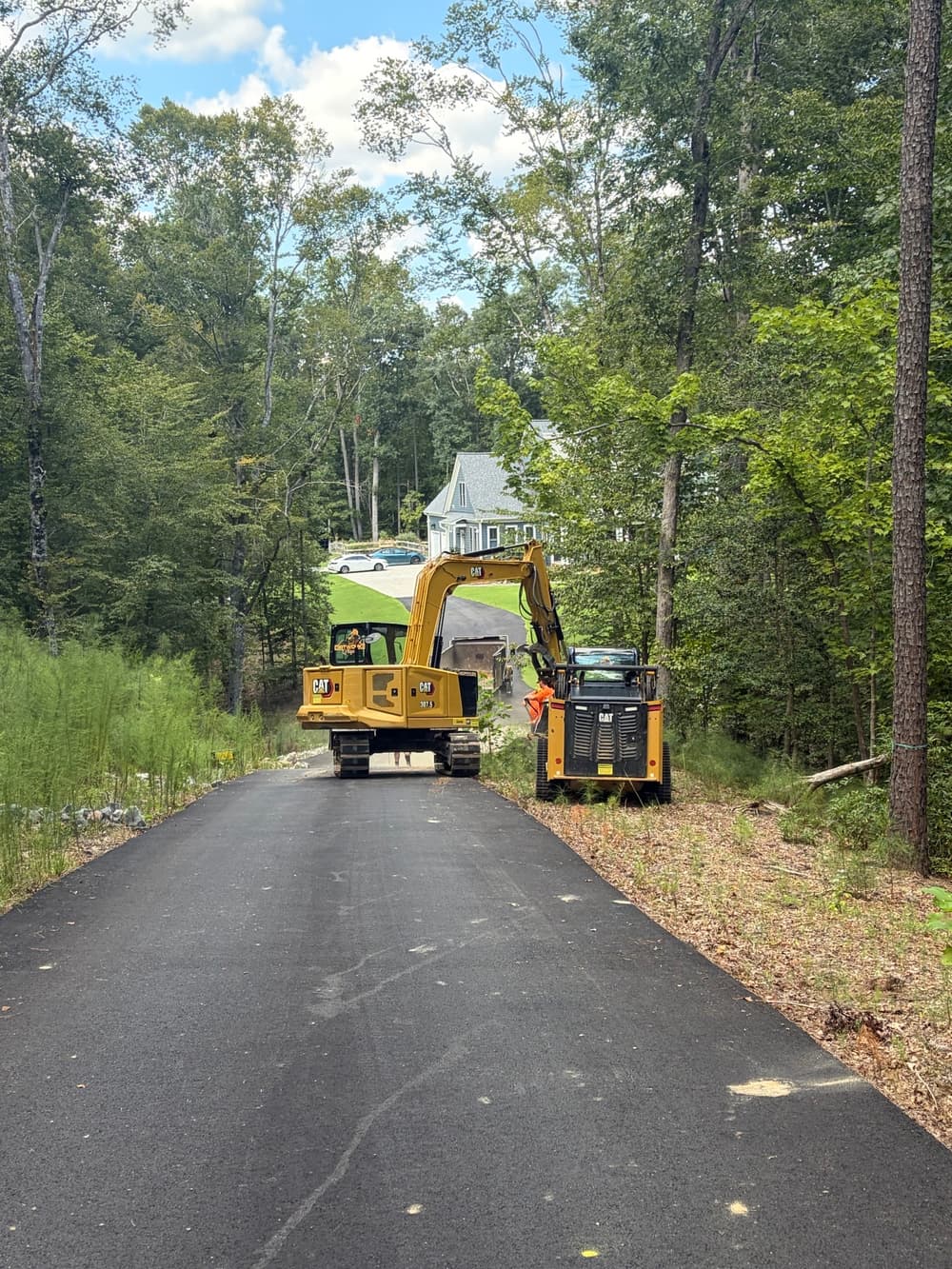
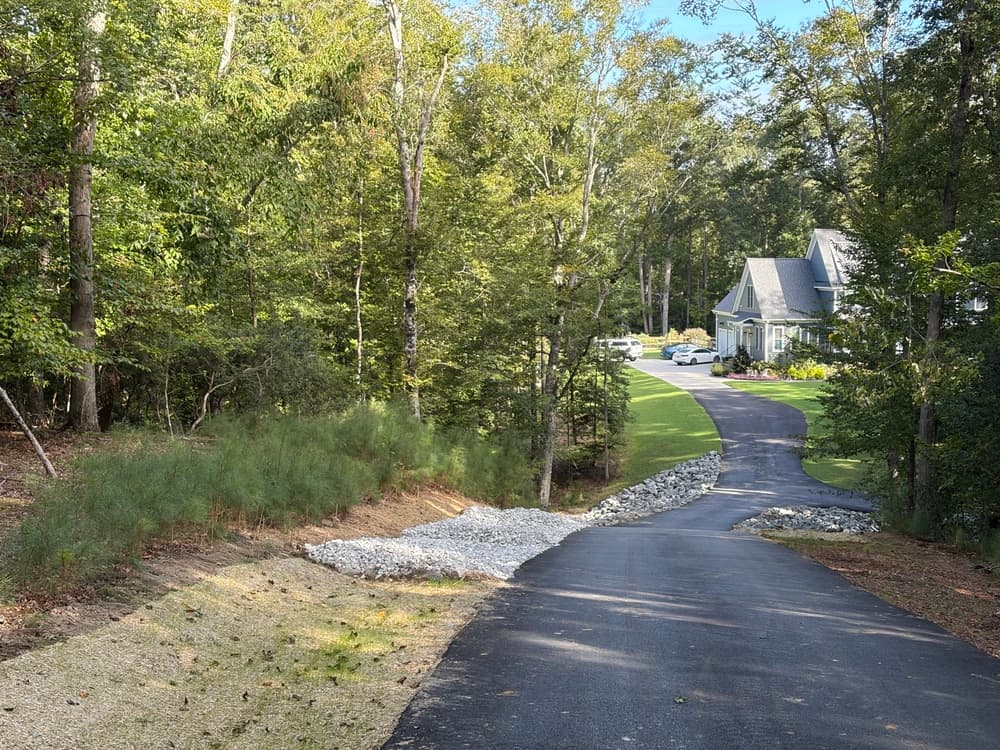
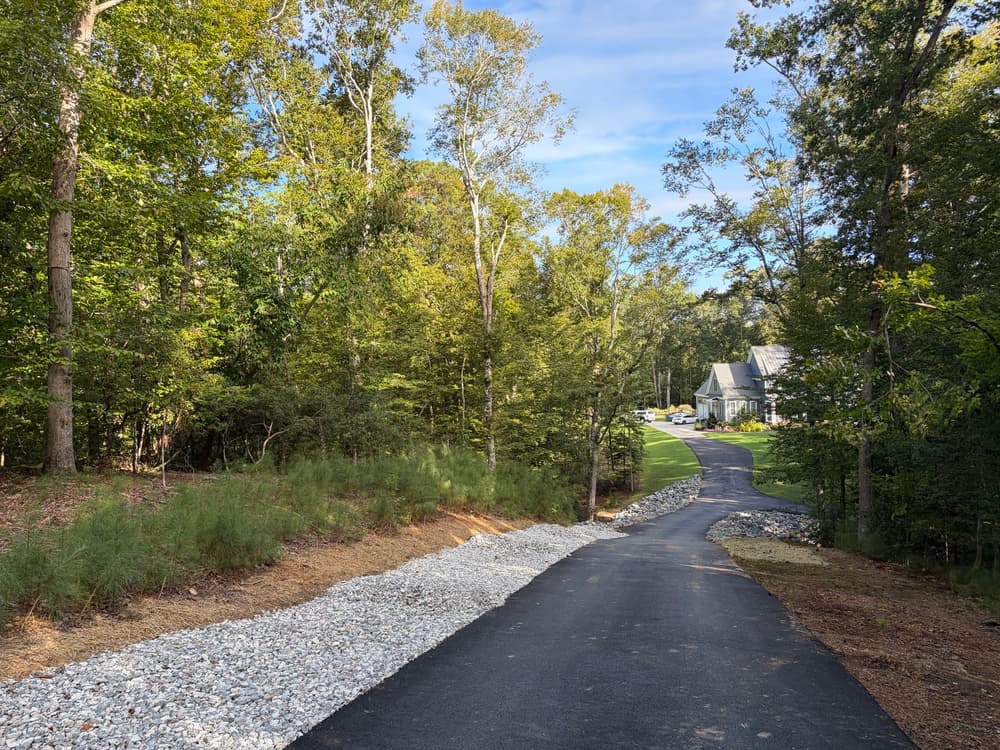
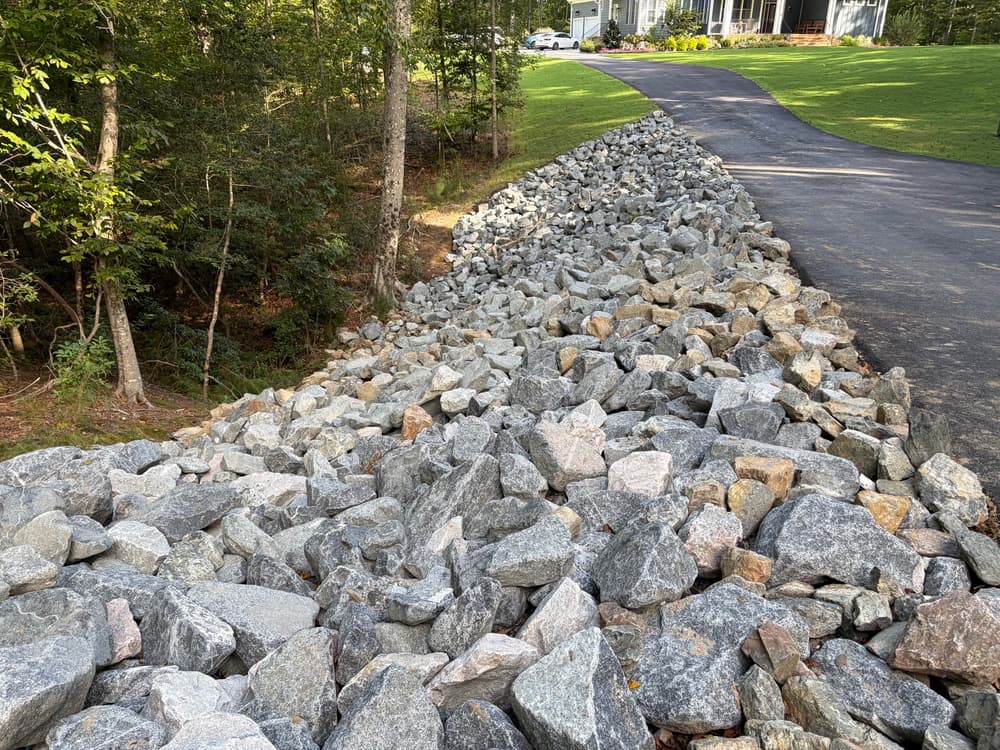
Once we had a clean base to work with, we laid proper underlayment and started rebuilding from the bottom up. We exported the wet unsuitable fill and brought in 40 tons of structural fill to give the area a solid foundation again. Then came 180 tons of fresh rip rap on top of what we salvaged and reused from the original placement. For the eroded swale, we installed VDOT #3 rock with underlayment and check dams to slow the sheet flow and keep water from undercutting the area again. That's 20 tons of VDOT #3 in the swale alone.
Getting the underlayment right is the part most people never see, but it's the whole game. Wrong fabric - or no fabric at all - and water moves soil right out from under the rock. The rip rap shifts, voids open up, and you end up with exactly what this homeowner inherited. Using the correct geotextile fabric underneath locks everything in place and keeps the stone working the way it's supposed to, even under heavy sheet flow.
Properties in the Virginia area with long private driveways and sloped terrain deal with this kind of erosion more often than people realize. The finished result here is a driveway that's properly armored on both sides with solid rip rap, a swale that now manages water instead of getting destroyed by it, and a foundation underneath that's actually built to hold. No more sinkhole. No more washout.