Driveway Drainage Fix in West Point
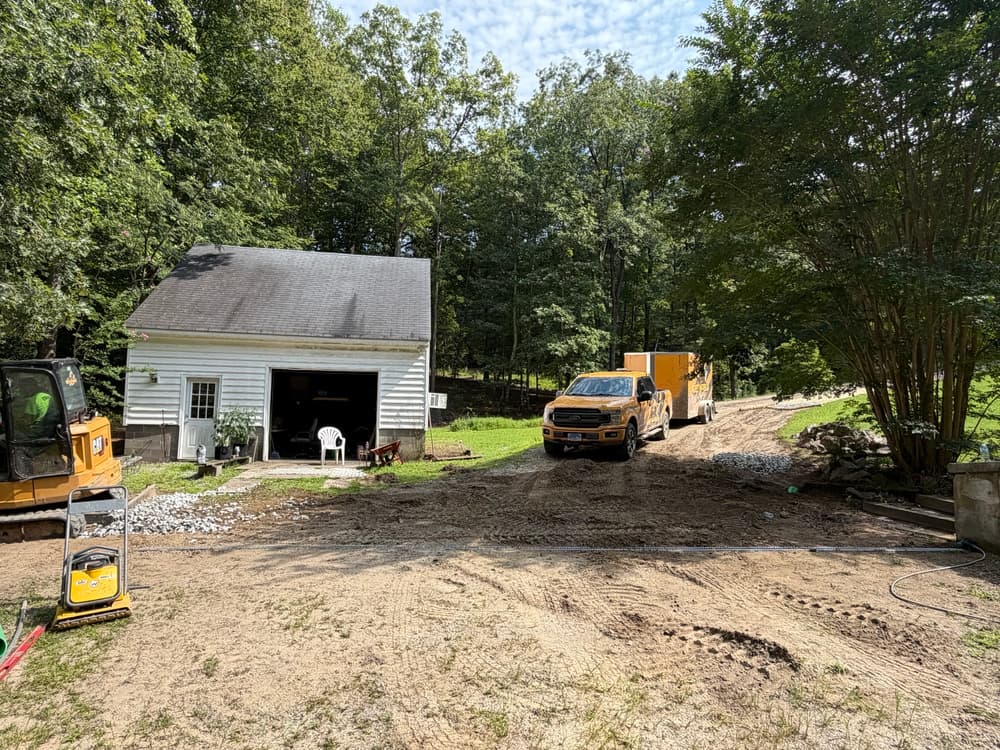
Water was tearing this driveway apart. Every rain event was cutting rills into the surface, pushing gravel off to the sides, and sending runoff in directions it had no business going. That kind of erosion doesn't fix itself - it gets worse every season if you don't address the root cause.
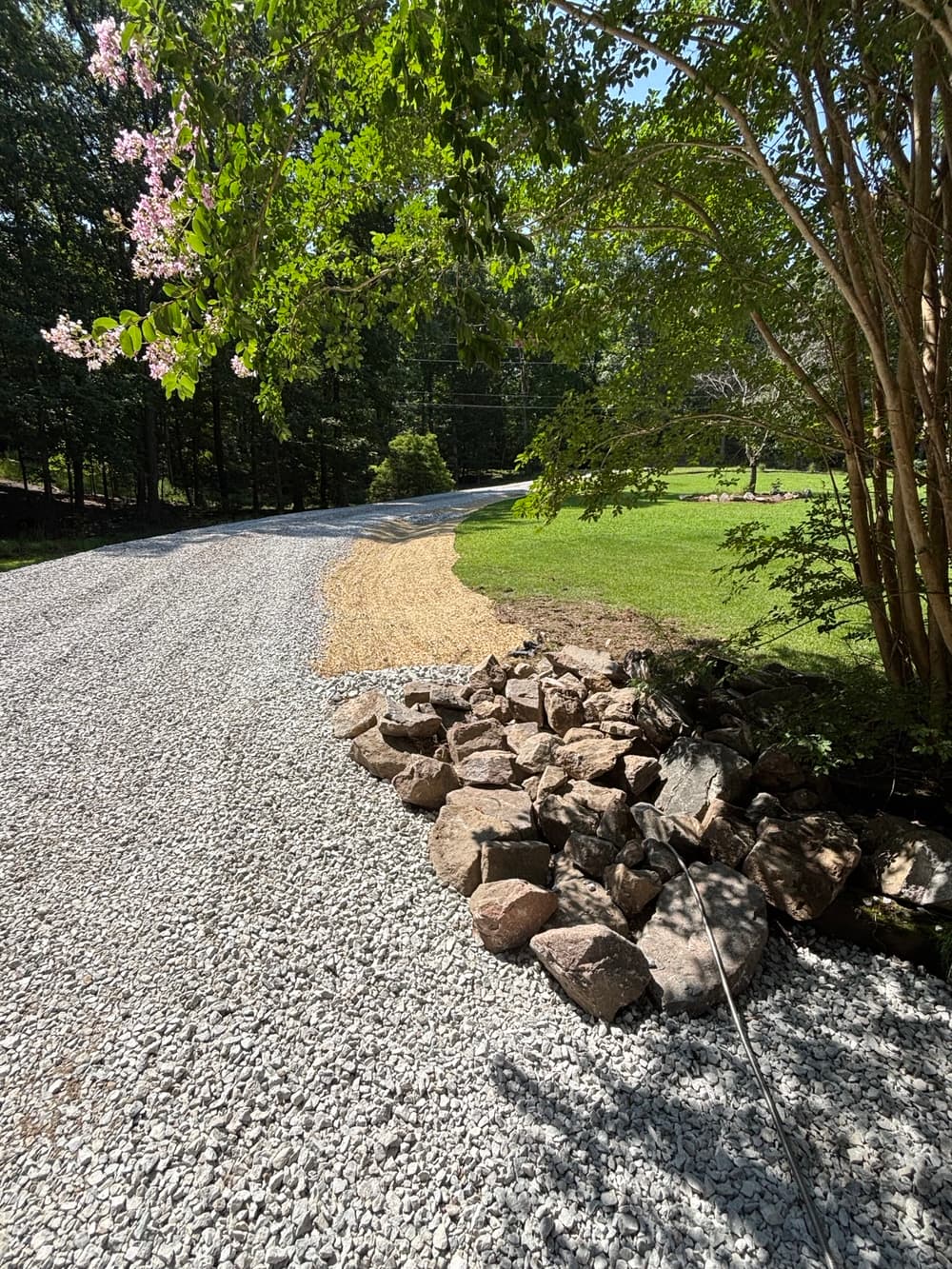
Here's what we were actually dealing with: too much sheet flow with nowhere to go. The water was concentrating across the driveway surface instead of being captured and redirected. So we engineered a solution that handles it at the source. We established a new swale to intercept the runoff, then built in check dams to slow the water down and prevent it from gaining enough speed to tear things up.
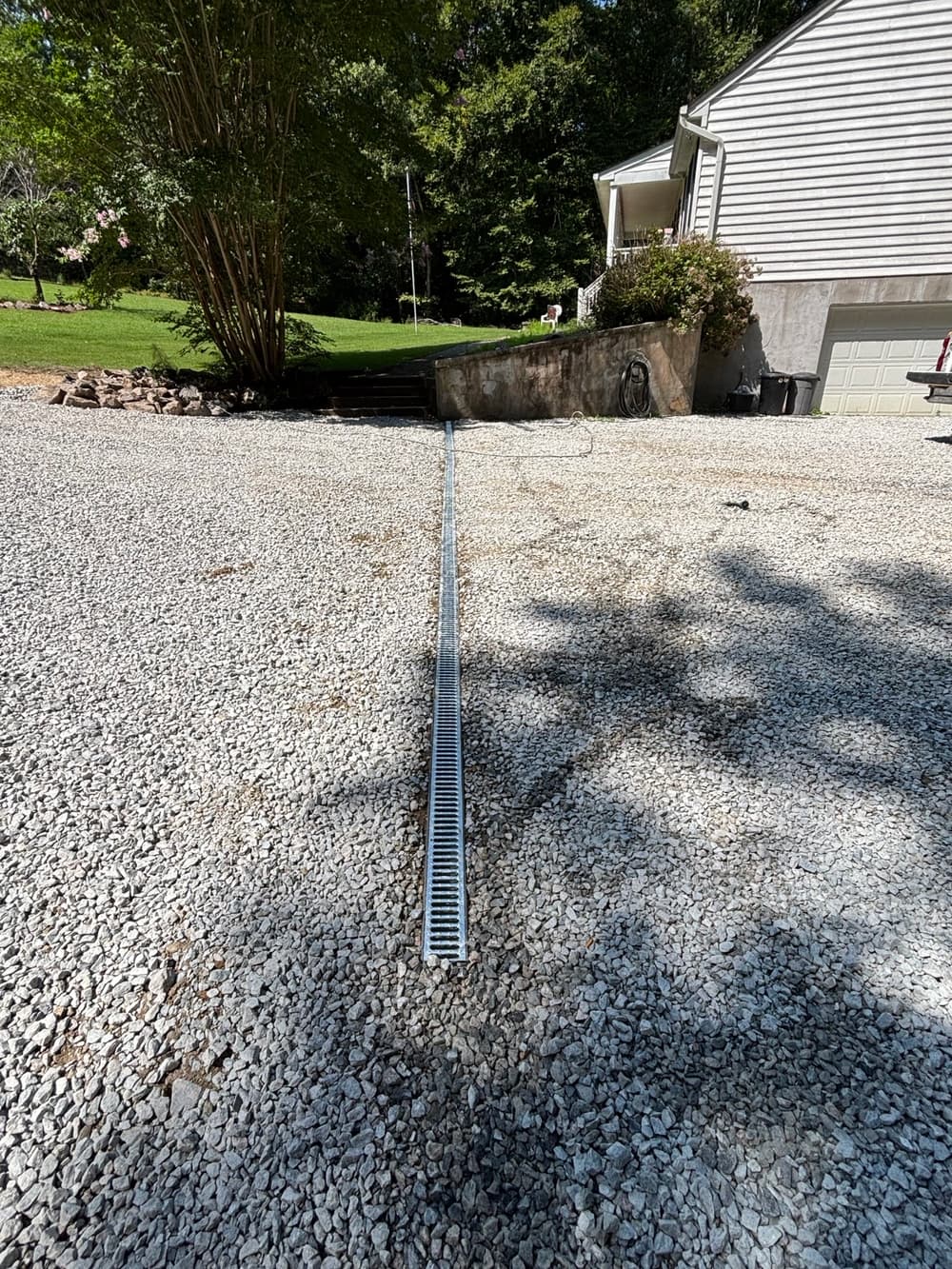
For the areas where sheet flow was the bigger issue, we installed inlet drains designed specifically to catch that wide, shallow water movement before it causes damage. The piping ties everything together so the water has a clear, controlled path off the property. It's not a patch job - it's a proper drainage system built into the driveway itself.
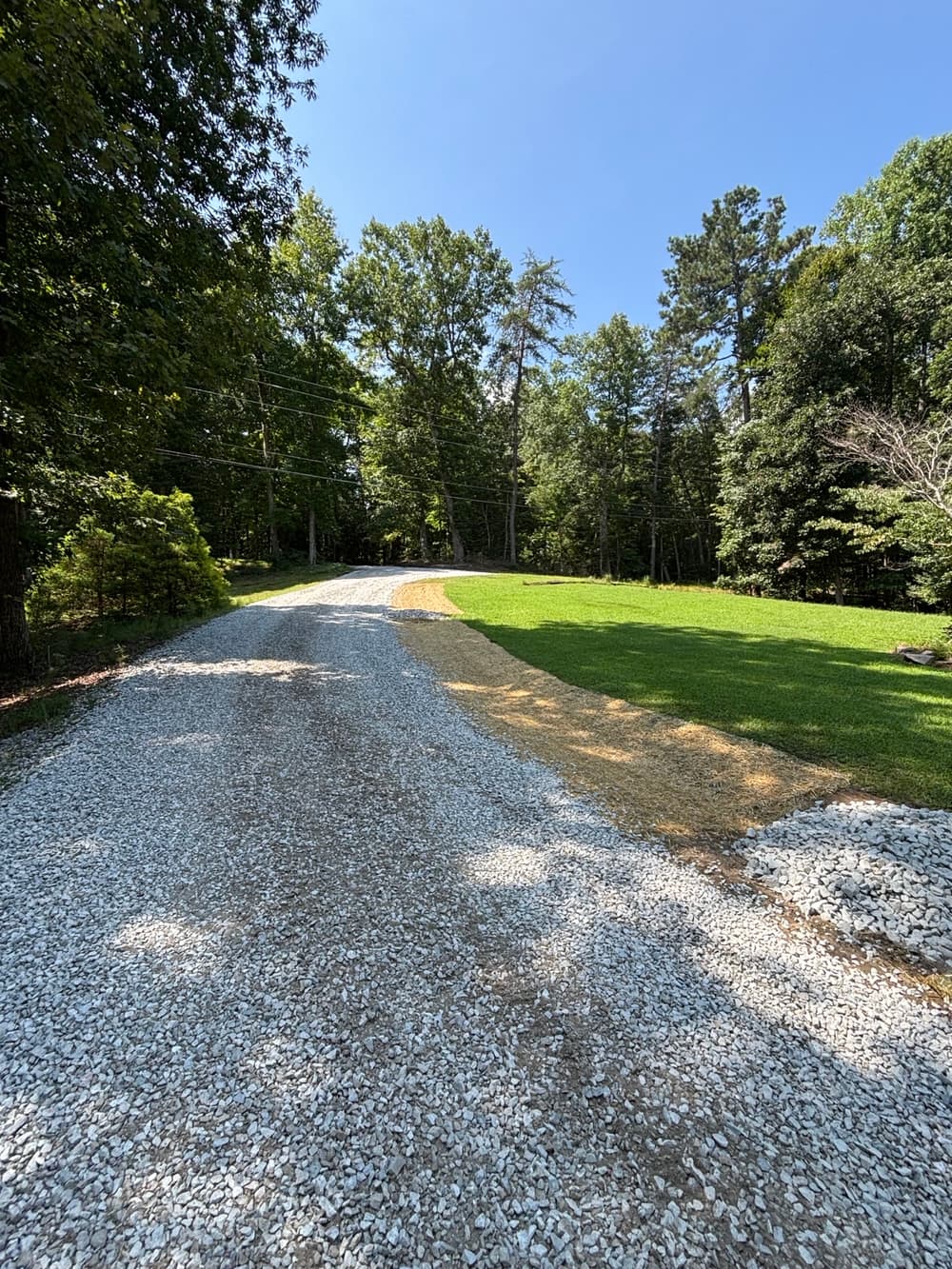
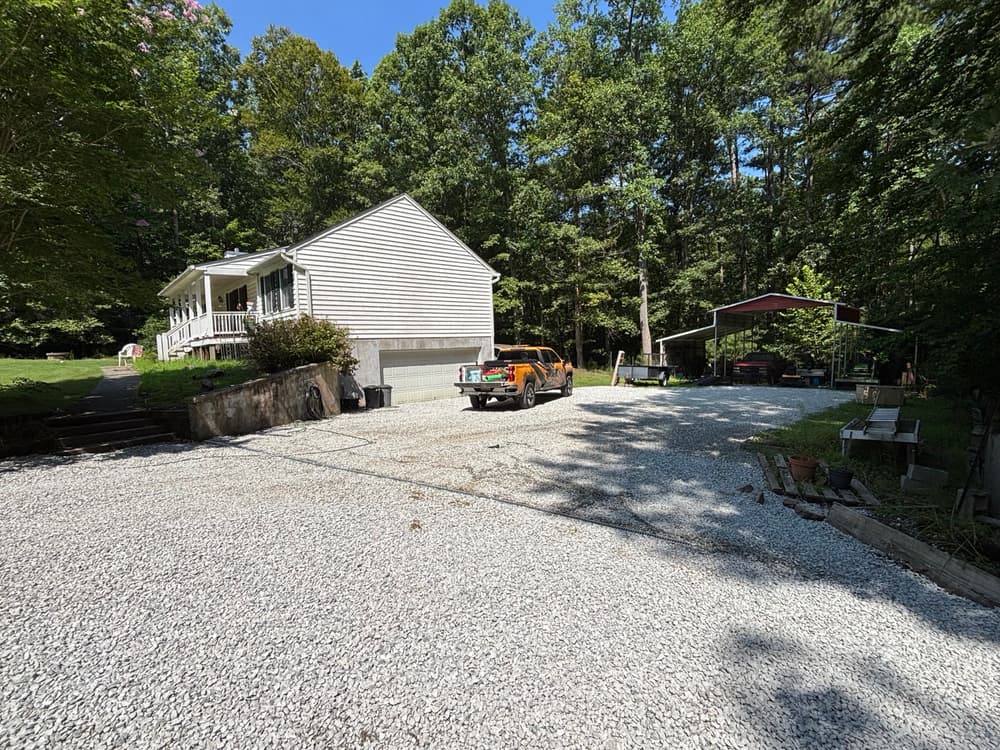
Once the drainage infrastructure was in place, we brought in fresh gravel and spread it across the driveway. That clean, uniform stone surface you're seeing now is the end result of pulling out the damaged material and starting fresh with proper grading to support the new drainage layout. The rock check dam placement along the swale edge keeps everything locked in and functioning the way it should.
This type of work comes up a lot for properties around West Point, Virginia where driveways run through wooded lots with grade changes. The combination of tree canopy rainfall concentration and sloped terrain creates exactly these kinds of drainage headaches. Getting the water management right is the only long-term answer.