Asphalt Sinkhole Repair in Richmond
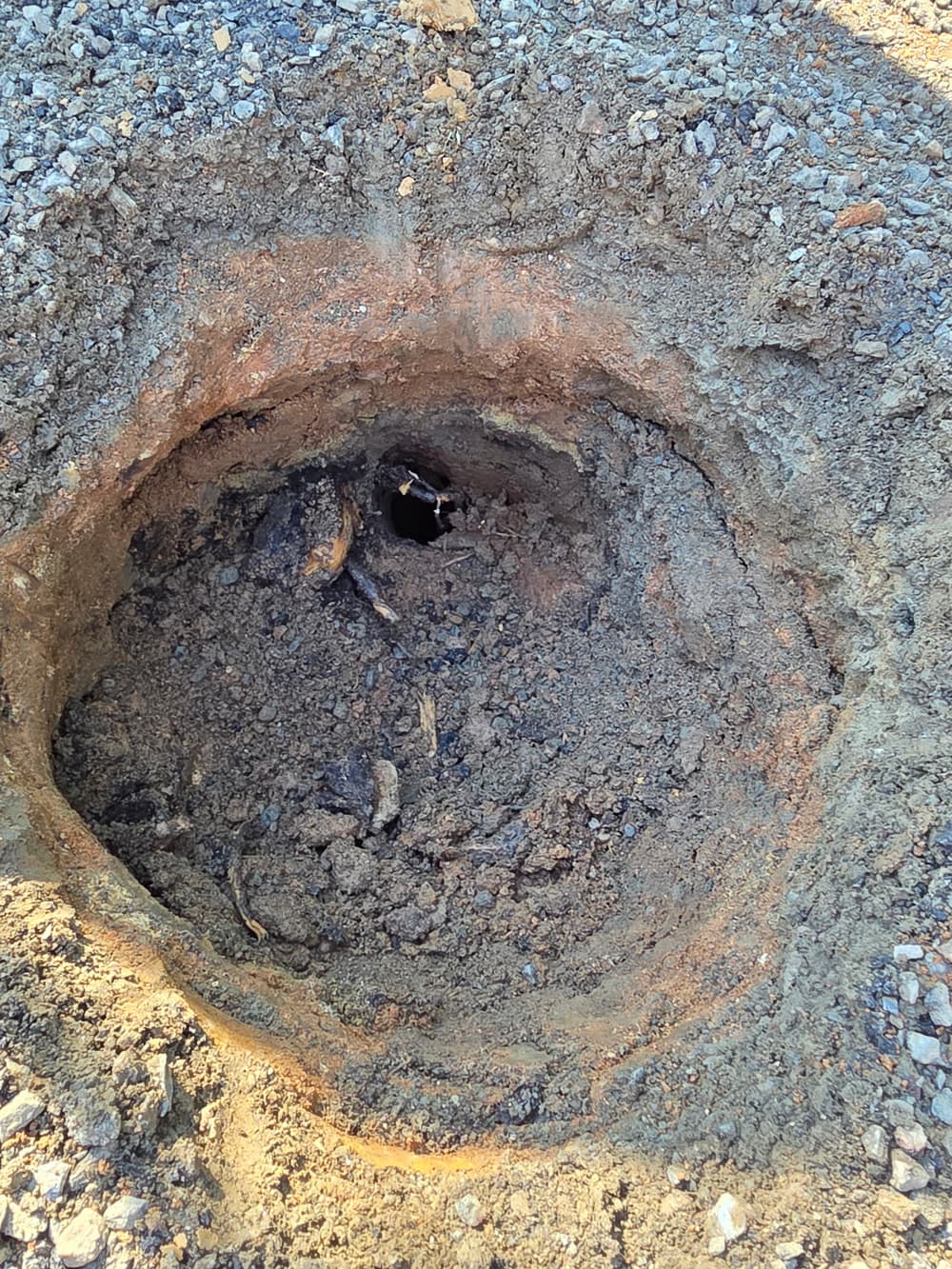
A customer noticed a random hole forming in the middle of their asphalt driveway. Easy fix, right? Not quite. Once we started digging in to investigate, we found the real problem - a sinkhole underneath the surface. That changes everything.
Sinkholes under driveways are more common than most people think, especially in older neighborhoods. The asphalt on top can look mostly fine while the ground beneath it is slowly giving way. If you just patch the surface without addressing what's happening below, you're going to be back in the same spot - or worse - before long.
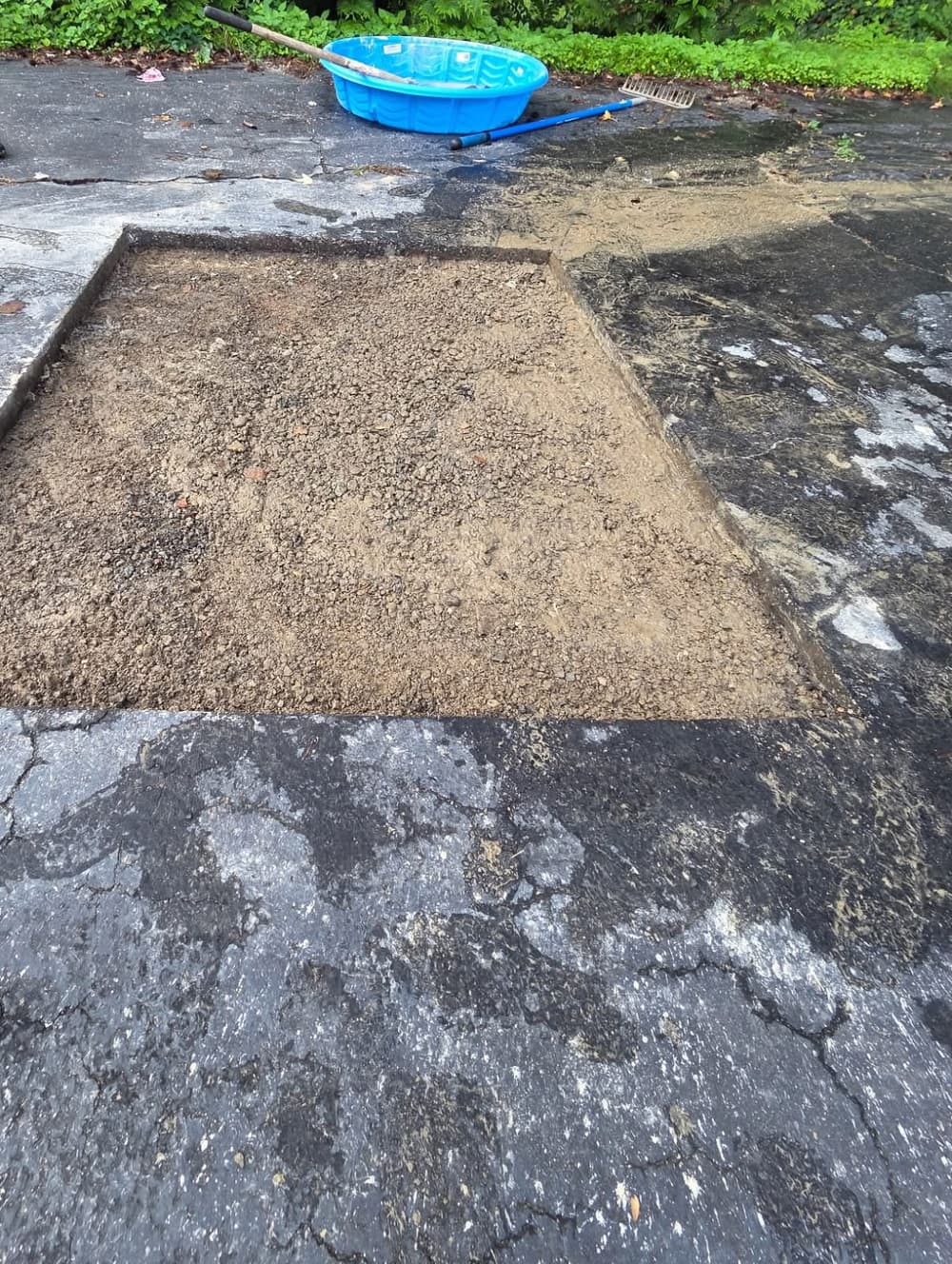
Here's what the process actually looked like on this one. We saw-cut the asphalt to open up a clean, square section over the problem area. Once we were able to dig through and get a good look, we brought in flowable fill - a pourable, self-leveling material that gets pumped down into voids and sets up solid. It fills gaps that you simply can't compact or pack by hand. We let that cure fully before coming back to finish the job.
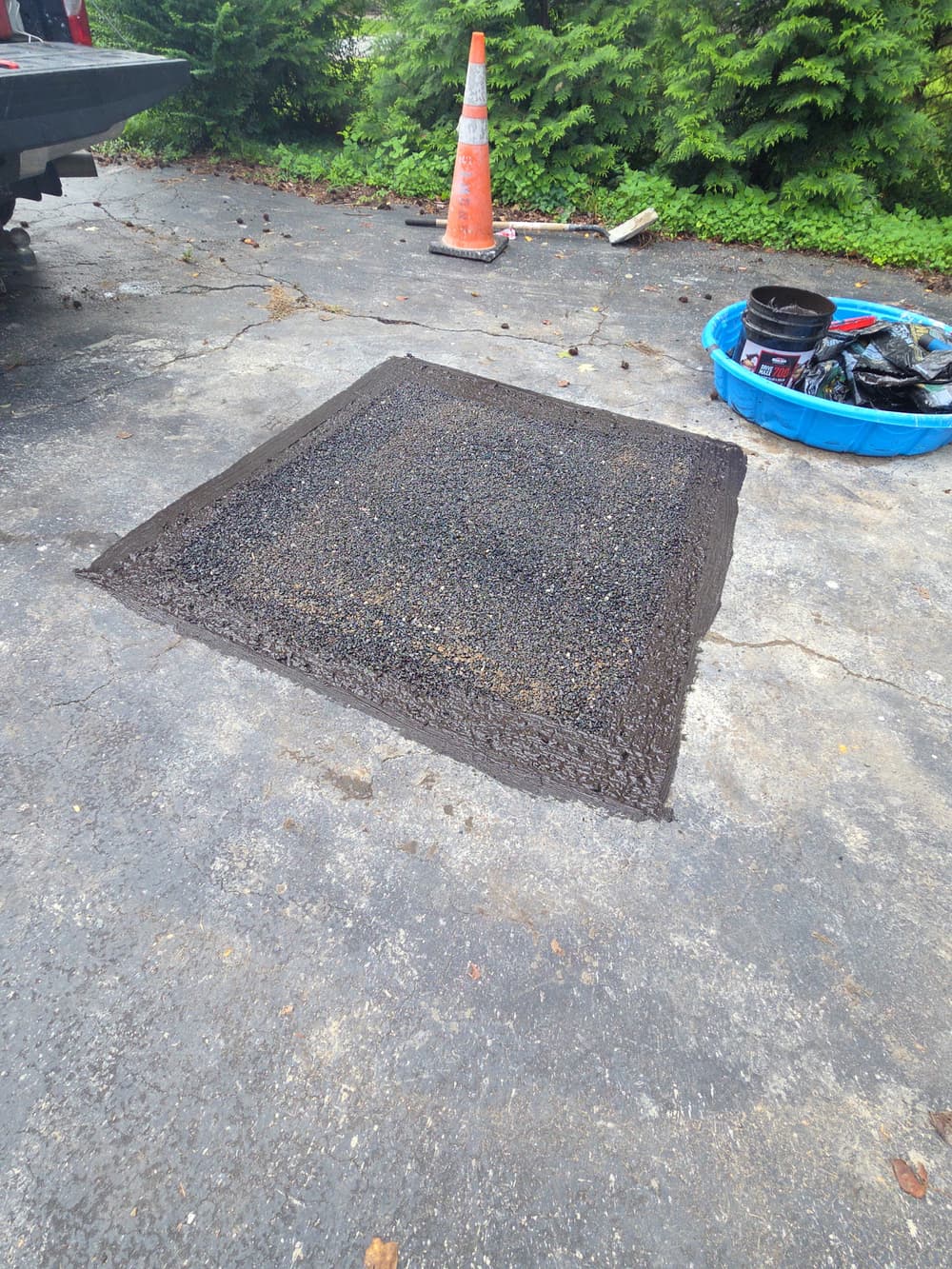
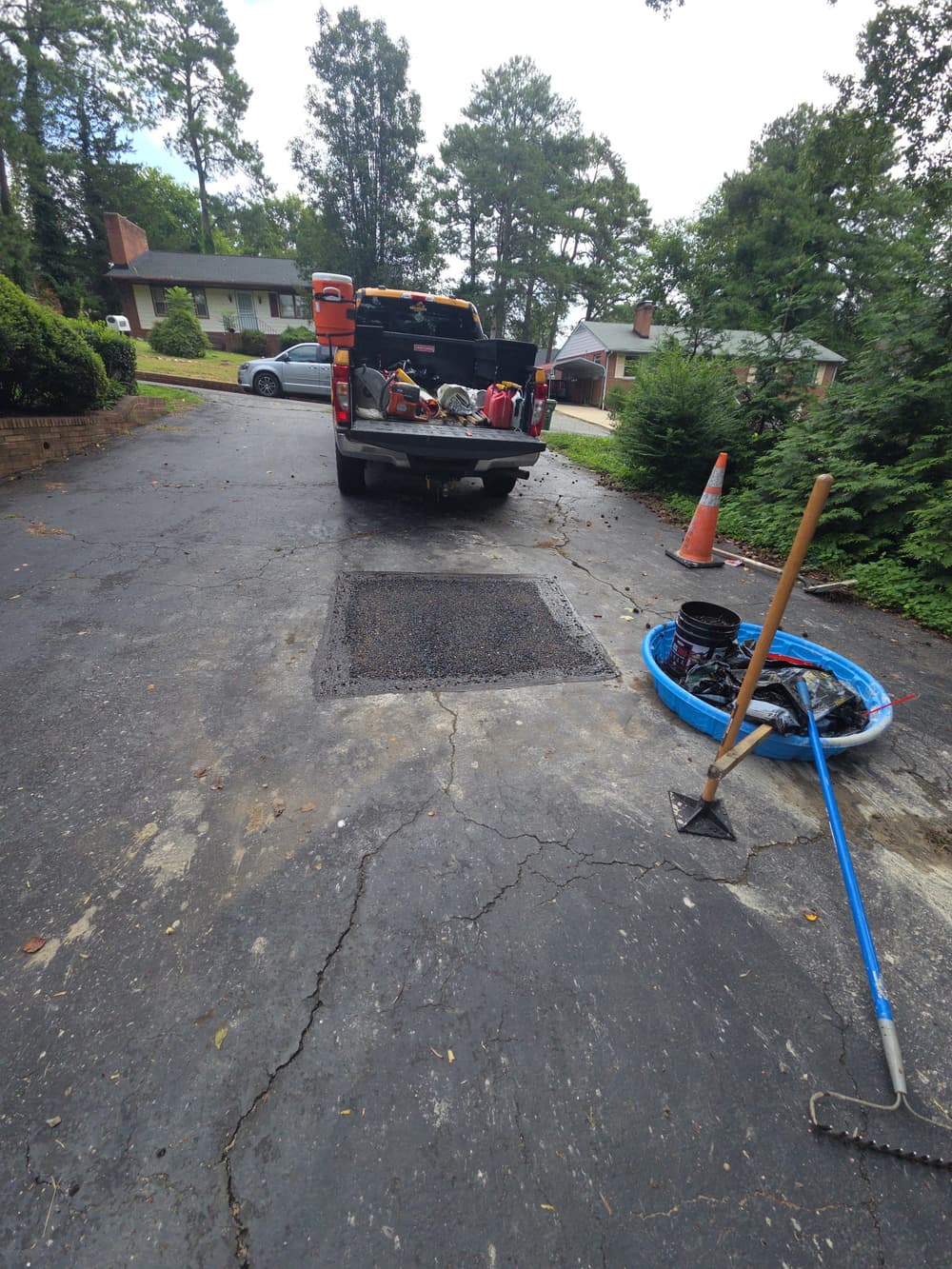
On the return visit, we patched the asphalt back in place over the stabilized base. The saw-cut edges give the new patch clean, defined lines so it bonds properly and holds up over time. It's a two-step process, but it's the right way to handle a sinkhole. Skipping the flowable fill and just throwing asphalt on top would be a band-aid over a much bigger problem.
If you've got a soft spot, a low area, or a hole forming in your driveway around the Richmond area, don't ignore it. What looks like a simple surface issue can turn into a serious safety hazard and a much more expensive repair down the road.